



The Walking Assessment (Bronze) £160
This includes:
- 60 minute appointment length
- Discussion of pain/injury
- Range of movement & strength testing
- Static posture analysis
- ½ meter walking pressure plate testing
- Treatment plan put in place
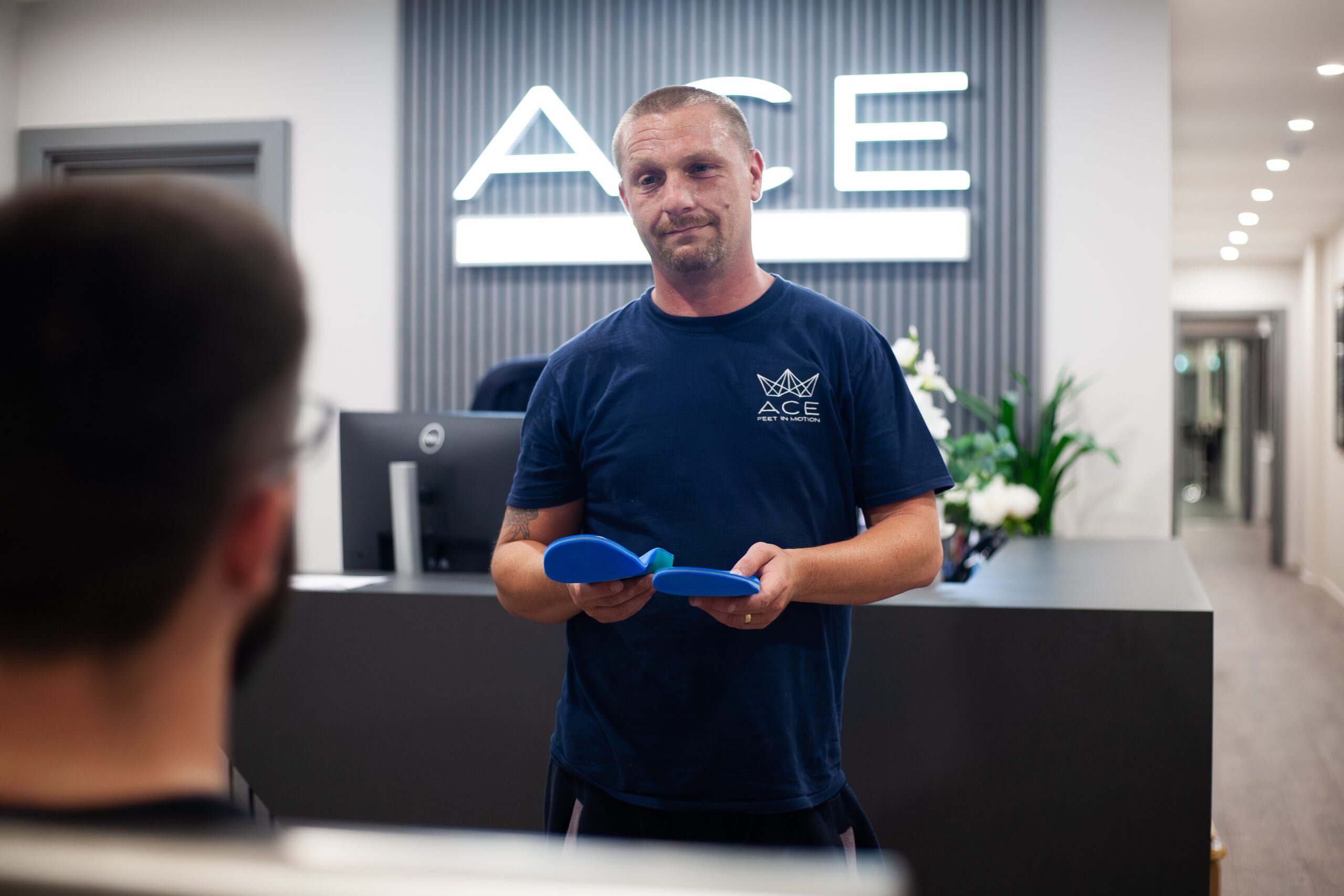
Orthotic therapy involves the prescription of insoles designed to help manage pain, support movement, and aid recovery from injury.
Book an appointmentAt ACE, we use insoles to help offload specific structures. For example, if you are experiencing pain in a tendon around the ankle, an insole may be prescribed to support the foot’s mechanics and reduce the workload placed on that tendon, allowing symptoms to settle.
In most cases, we view insoles as a short- to medium-term tool (typically 6–12 months). They are used alongside a tailored strength and rehabilitation programme aimed at restoring normal function and helping you return to activity as quickly and safely as possible.
For some conditions, such as significant tendon dysfunction or certain bony problems – longer-term insole use may be recommended. This will always be discussed fully during your appointment so you understand the reasoning and expected outcomes.
Functional foot orthoses (commonly known as insoles) are designed to influence how forces travel through your feet and lower limbs during standing, walking, and running. They work by reducing excessive load, absorbing or redistributing pressure, and addressing specific biomechanical findings identified during your assessment. Insoles can be used in different ways depending on the problem being treated. For some people, they help relieve pressure from irritated joints, bones, or soft tissues. For others, they provide support to assist muscles or tendons that are being overloaded, or help guide foot movement into a more efficient and comfortable pattern.
Insoles are used to reduce load on the affected tissue. They will often be used in a combination with a rehab programme to improve tissue capacity/recovery.
Used to reduce pressure on areas where corns/callus or breakdowns occur.
If a tendon has passed the point of functioning properly then a long term insole might be needed to help replace the function of the damaged tendon. These will often be a long term intervention.
Orthoses can be used to improve support and reduce excessive movement in the foot and ankle.
Insoles can be utilised to reduce mobility or rotation on certain bones and joints. They can also be used to reduce limb length discrepancy if needed.
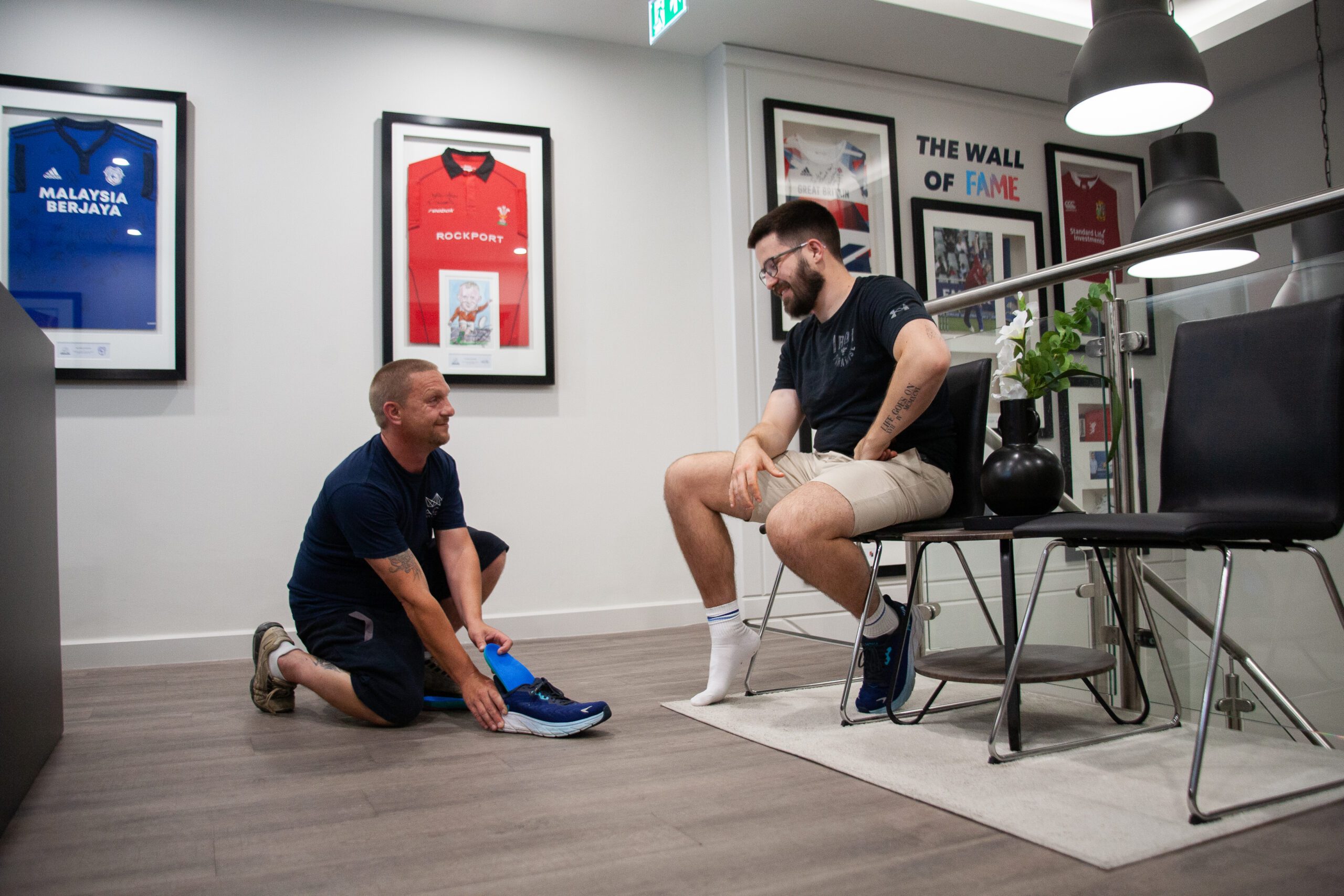

Prefabricated insoles are ready-made supports designed for chairside application and immediate use. Our Junior FiMs® and Senior FiMs® ranges are our own in-house brands, developed to provide reliable support for common foot problems. These insoles can be adjusted during your appointment with the addition of specialist postings where required. They are commonly used as a first-phase, cost-effective option for minor foot pathologies, but are more limited in their application than modular or bespoke insoles, particularly for more complex or long-term conditions.
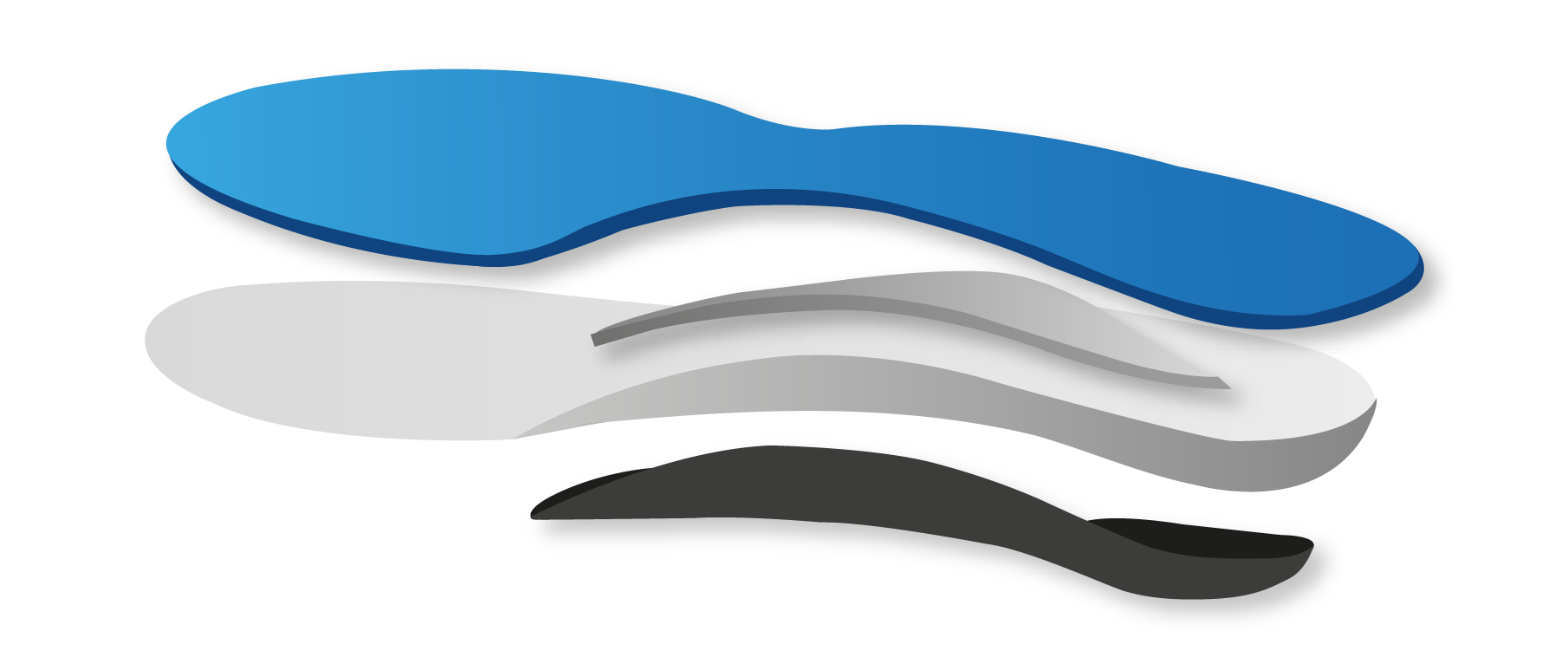
With over 20 years of manufacturing experience, we have developed our own range of modular insoles – ModularFiMs®. A modular insole begins with a pre-made support shaped to an optimal foot position, which is then customised by Orthotic Technician to suit your individual needs. Your prescription may include additions such as corrective postings, extra cushioning, or targeted support, depending on your assessment findings.
Modular insoles are highly effective for treating many common foot and lower-limb conditions and have the advantage of being made and issued during your appointment, allowing treatment to begin immediately.
Bespoke insoles are custom-made using your unique foot profile, which is captured during your appointment to ensure the insole matches both your foot shape and clinical needs. This profile can be obtained using traditional techniques, such as slipper casts or impression boxes, as well as advanced digital 3D foot scanning.
Once captured, your foot data is used within a CAD-based design process, allowing precise control over the shape and function of the insole. The final design can then be manufactured using either subtractive methods, where the insole is milled from a solid block of material, or additive methods, where the insole is built layer by layer using 3D printing.
The most appropriate method is chosen based on your condition, activity level, footwear, and comfort requirements, before selecting the most suitable base material.
EVA Milled Insoles
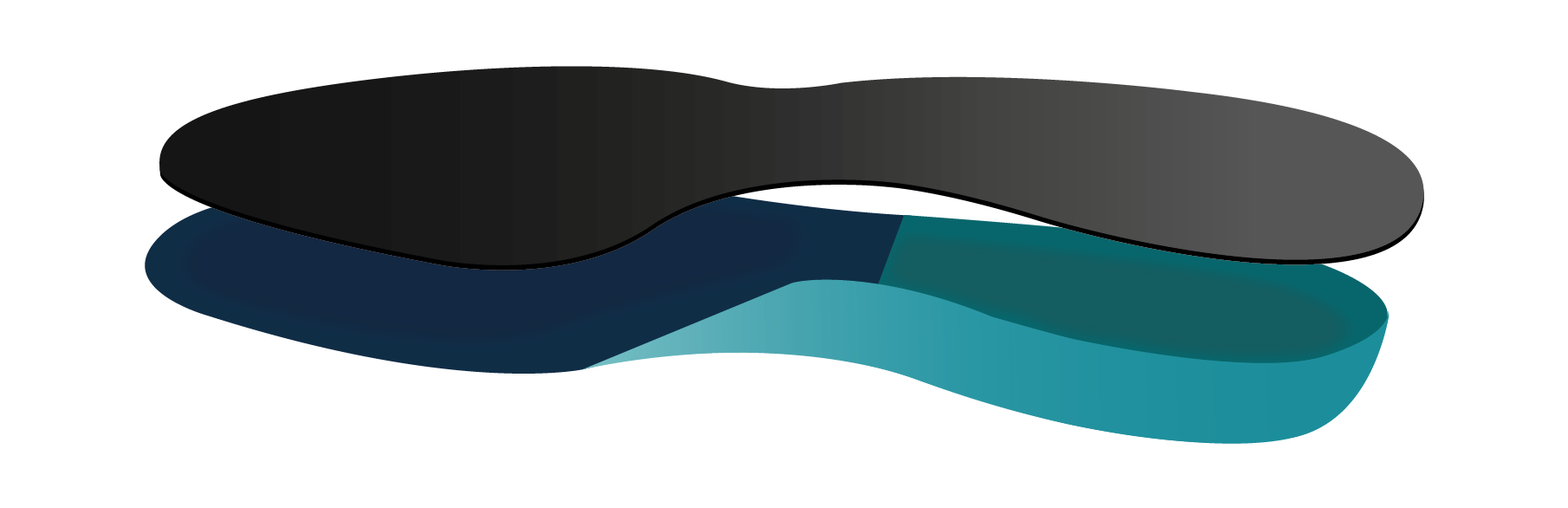
EVA milled insoles are made from a durable, rubber-like material and are digitally designed using CAD software before being precisely milled from a solid block of EVA. This manufacturing process allows for accurate shaping and reliable consistency. These insoles are lightweight, comfortable, and well tolerated by most patients, making them particularly suitable for active and sporty individuals who require cushioning, support, and flexibility.
Polypropylene Vacuum-Formed Insoles
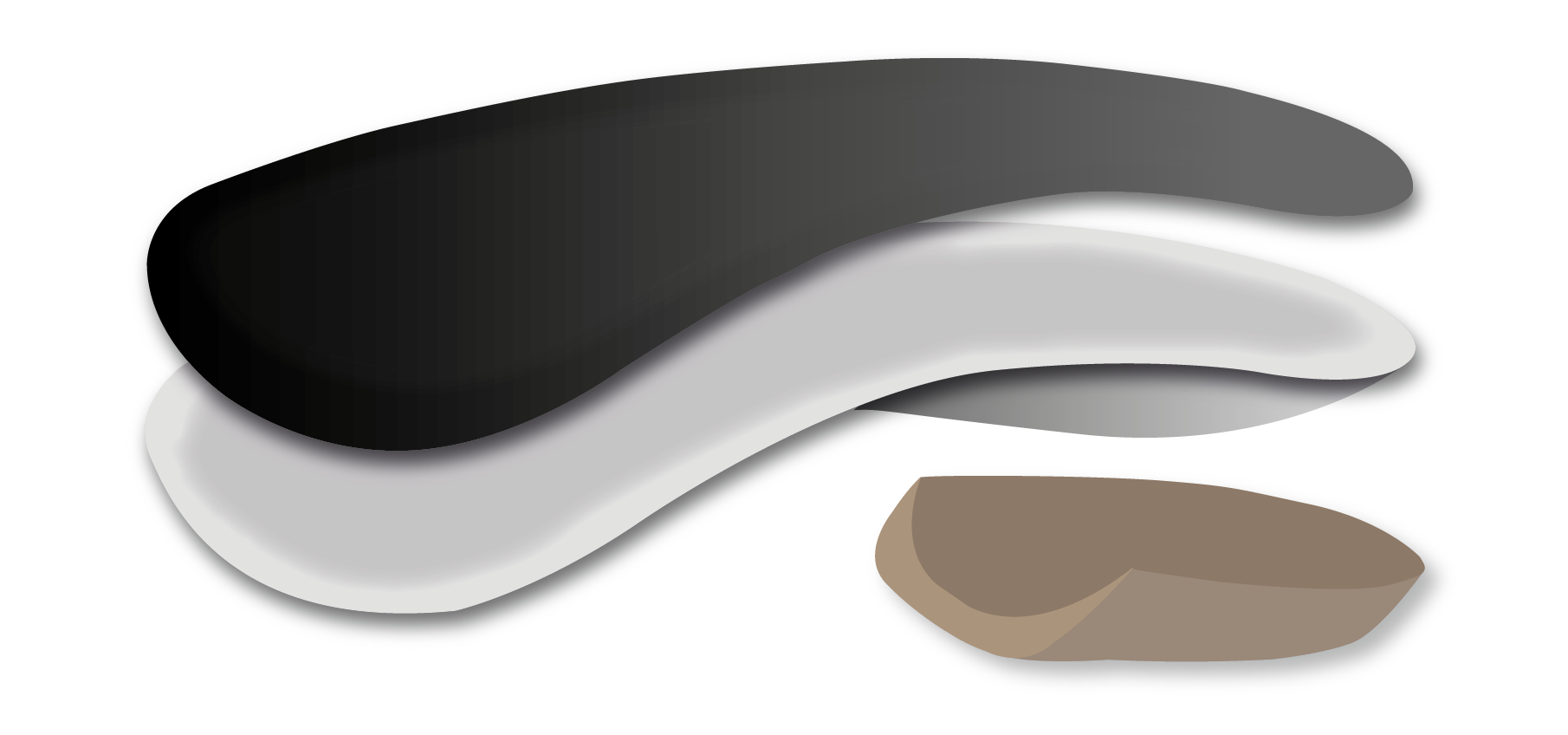
Made from polypropylene (a durable plastic), these insoles are generally firmer and lower profile than EVA-based devices. They are vacuum-formed over a model of your foot to provide more structured support and control. We typically recommend polypropylene insoles when greater correction or stability is required, particularly for conditions where precise foot positioning is important.
Carbon Fibre Insoles
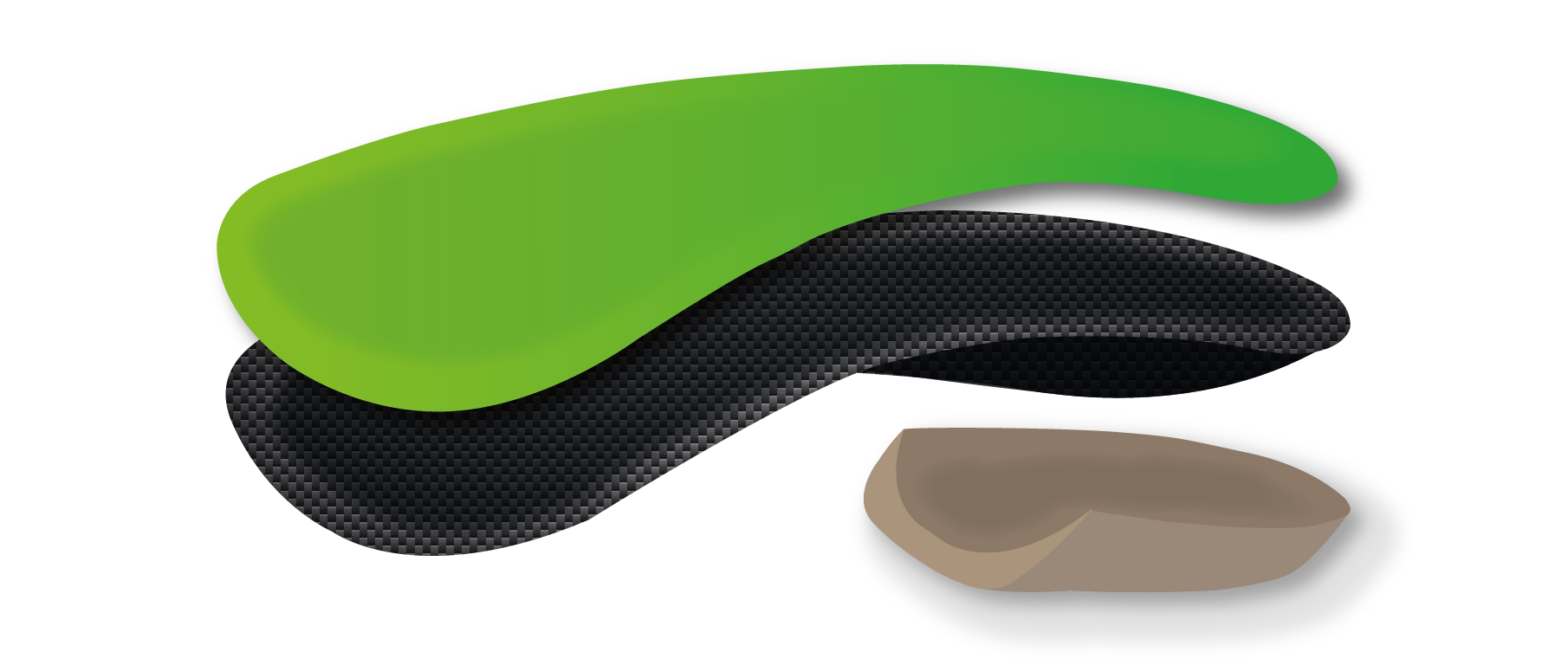
Carbon fibre insoles are extremely lightweight and very firm, making them ideal where maximum control is required. Their slim profile means they are particularly suitable for patients with limited space in footwear, or for those who need a high level of support without added bulk.
3D Printed Insoles
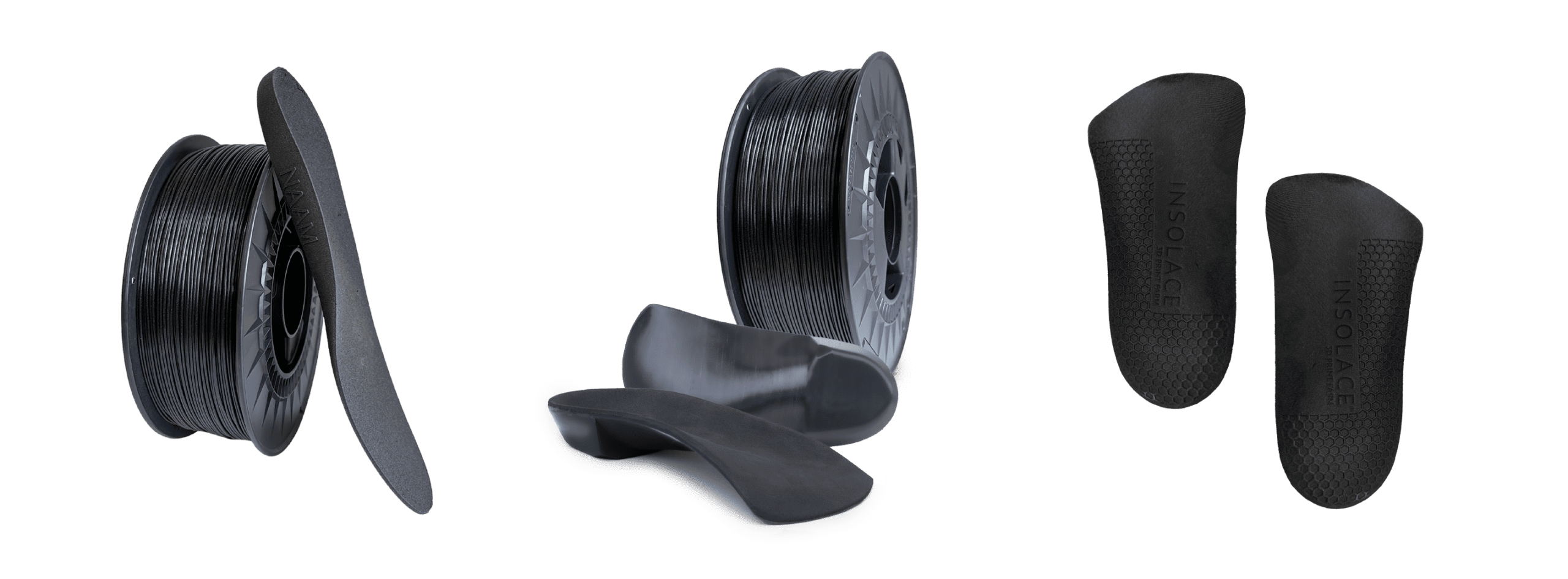
Our 3D printed insoles are designed using digital foot scans and specialist CAD software, before being manufactured in our Insolace® 3D-Print Farm using medical grade filaments and specialist printers. This process allows us to produce highly accurate, consistent insoles tailored precisely to your individual foot profile.
We offer three main types of 3D printed insoles: flexible EVA-like insoles for comfort and shock absorption, polypropylene-like insoles for increased control and stability, and rigid MJF / PA12 shell insoles where maximum support is needed in a low-profile design. As the entire process is digital, each insole is 100% repeatable, produces minimal material waste, and can be top-covered where required for added comfort.
If you believe insoles could help you follow this guide on how to get booked in.
Book an appointmentBook in for a foot and lower limb injury assessment. A detailed assessment will be carried out to determine whether insoles would be beneficial.
If insoles are needed then the musculoskeletal podiatrist will build a prescription from the detail collected during your assessment.
Once the type of insoles has been decided then the insoles can be made. Modular insoles can be made and issued during your appointment (Cardiff HQ only), whereas custom made insoles can take up-to 10 working days to be manufactured.
At our Cardiff headquarter we offer an insole fitting service. This service is used for both modular and bespoke.
In order to be prescribed insoles, you are required to book in for an assessment via one of the options below.
This includes:
This includes:
This includes:
This includes:
Our HCPC Registered Podiatrists have spent a minimum of 3 years at university studying towards a BSc in Podiatry.

If you are an existing patient of ours and are looking to purchase an extra or replacement pair of insoles get in touch with our friendly admin team and they will be able to arrange that for you.
Below we have answered some frequently asked questions we regularly get at our clinics prior to your appointment.
Your podiatrist will discuss this in depth during your appointment. You will also have full control over what you end up with.
The cost of insoles is based largely around the cost of material and the labour that goes into making them. For a full price list click here.
This question is always difficult to answer because there are many factors to consider such as level of activity, foot type and body weight. As a general rule of thumb we say that modular insoles will last 12-18 months, EVA CADCAMs 18-24 months, plastic and carbon fibre 36 months +.
It’s completely up to you how many pairs you have. Insoles can be designed to be easier to inter- change, however certain footwear may be prioritised by the podiatrist. As private patients you can have as many as you like.
It is very important that these are hand washed only! The glues and materials are sensitive to heat so avoid washing machines, tumble dryers or direct heat from radiators.